"When I, the Golf GTi, first hit the scene in Frankfurt in ’75 I was pretty radical and, let me tell you, an instant hit. I mean, a four-cylinder engine with fuel injection, 0-60 in 9 seconds, all packed into a small "

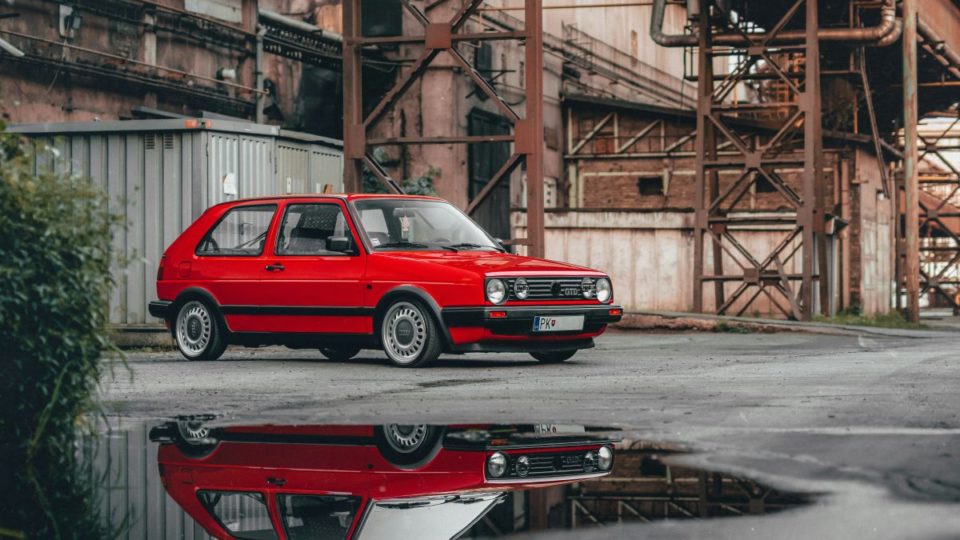
The Volkswagen Golf has been a pioneer for the past five decades. Style, quality, and refinement have elevated VW’s classless hatchback above the family car norm. And that’s without mentioning its most famous iteration, the GTI. But there’s another performance Golf family member that was arguably just as important: the GTD, a fellow Volkswagen hatchback trailblazer celebrating its 44th birthday in 2026.
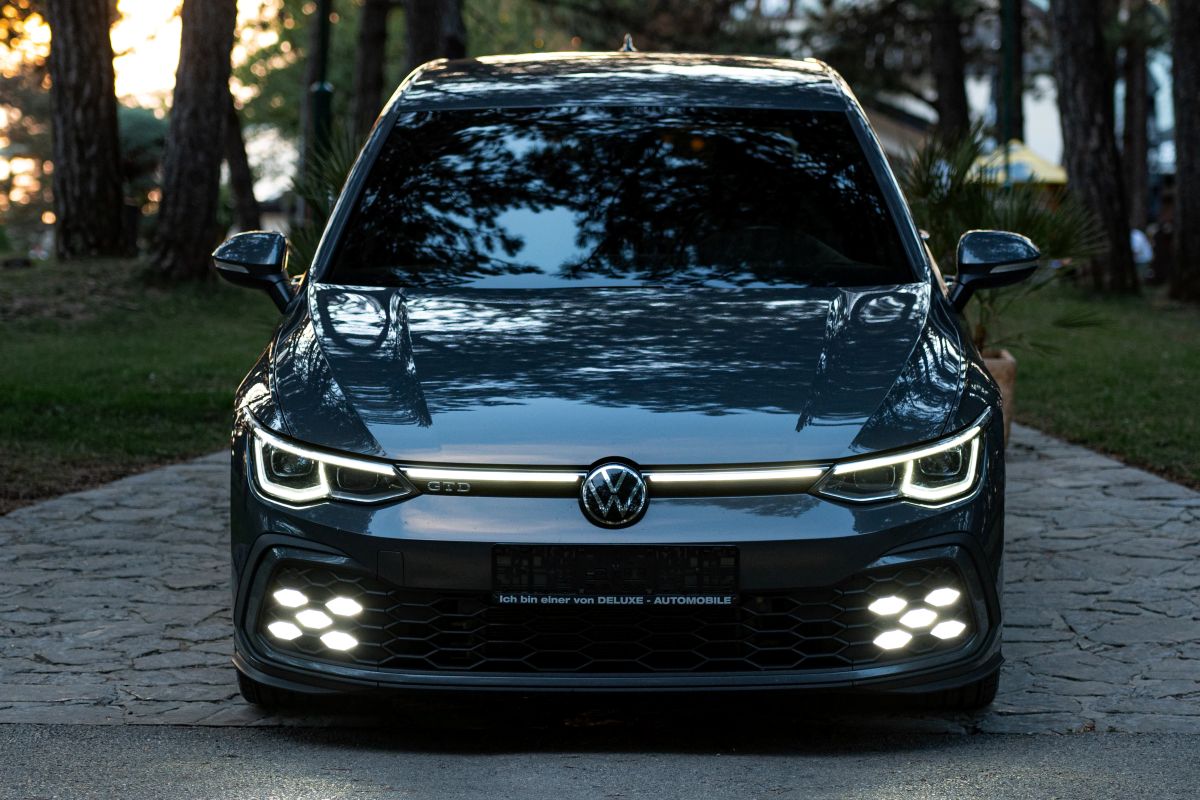
The first ‘performance’ Golf diesel story started in 1982. Billed as the first ‘sports’ diesel, the Golf GTD arrived at the same time as the five millionth Golf. Its on-paper 70bhp may have been 42bhp down on the 1.8-litre GTI released in the same year, but it performed so remarkably well that Volkswagen confidently named it after its famous petrol sibling.
The GTD’s recipe was simple: a Garrett / KKK turbocharger was added to the standard Golf diesel’s 1.6-litre engine to deliver a 0-62mph time of 13.5 seconds and a top speed of 96mph. Usually slow and sluggish, diesel cars had gained popularity thanks to their heightened economy following the numerous 1970s oil crises. But with figures that were genuinely impressive for a passenger-car diesel engine in the early 1980s, the GTD brought performance to the fore.
A main advantage of diesel is economy, and here lies the Golf GTD’s genius. With an urban fuel consumption figure of 42.5mpg against the GTI’s 26.6mpg, its fuel-sipping appetite was intact, despite its extra performance. And that parsimony was a big GTD selling point: even with 30 per cent and 16bhp more than the standard Golf diesel, the faster GTD could still return the same economy figures as its non-blown sister. Maximum torque of 98lb ft was delivered at 2,000rpm, too, 500rpm earlier than its 1.5-litre petrol sibling with the same power output.
The Golf D was an instant hit after its launch in 1976. To ensure the GTD added to its success, the new derv-drinking hotshot borrowed some of its GTI cousin’s styling cues. Grille badge, check. Two or four-lamp front grille (trimmed in silver, not red, fact fans), check. Wider wheels fitted with low-profile tyres, check. Black rear window surround, check. Plastic wheel arch spats, check. Taut and grippy handling, check. It was all there, and at a glance, only true Volkswagen fans would be able to tell the GTD and GTI apart.
While GTD drivers weren’t gripped by the same sports seats as in the GTI, the interior featured that car’s four-button steering wheel, now emblazoned with the ‘Turbo Diesel’ legend. Confusingly, the car was often referred to as the ‘Golf Turbo Diesel’ rather than GTD, too, referencing just how novel a turbocharger was at the time. But whichever name was used, VW’s small hatch now possessed yet another class-altering personality.
A company to finesse rather than radically alter a very successful recipe, Volkswagen knew it was onto a good thing, and the GTD formula was carried over into the Golf’s second generation, where it followed the same template as its predecessor. Lesser-trim versions also gained the turbo-diesel engine, while the first performance bump arrived in 1990, the addition of an intercooler bringing an additional 10bhp. The GTI still ultimately ruled the output roost, though: the 139bhp 16V arrived in 1986.
Through the decades that followed, the GTD was a permanent member of the Golf family. However, to keep the GTI badge sacrosanct on UK shores, the third-generation GTD was notable by its absence (though UK buyers did eventually receive the performance-oriented Mk3 TDI badge). In Europe, though, 1993 saw the introduction of a direct-injection TDI, which addressed criticisms that the previous model had grown a bit too soft and sluggish. The final flourish came in 1996, when the car borrowed the 1.9-litre 110bhp TDI from the Audi A4.
Throughout the fourth and fifth generations, new ‘Pumpe-Düse’ technology brought 130bhp and 150bhp flavours, but the car became more discreet, losing its ‘GTD’ badges entirely to be renamed the ‘GT TDI’. It wasn’t until the introduction of the sixth-generation Golf in 2009 that the GTD returned to the UK. And what a return: an output of 170bhp, 0-62mph in 8.1 seconds, 258lb ft of torque, a top speed of 138mph, and 53.3mpg! The distinctive but subtle ingredients were the same as before: silver-trimmed grille on the outside, Golf GTI-style checked seats on the inside.
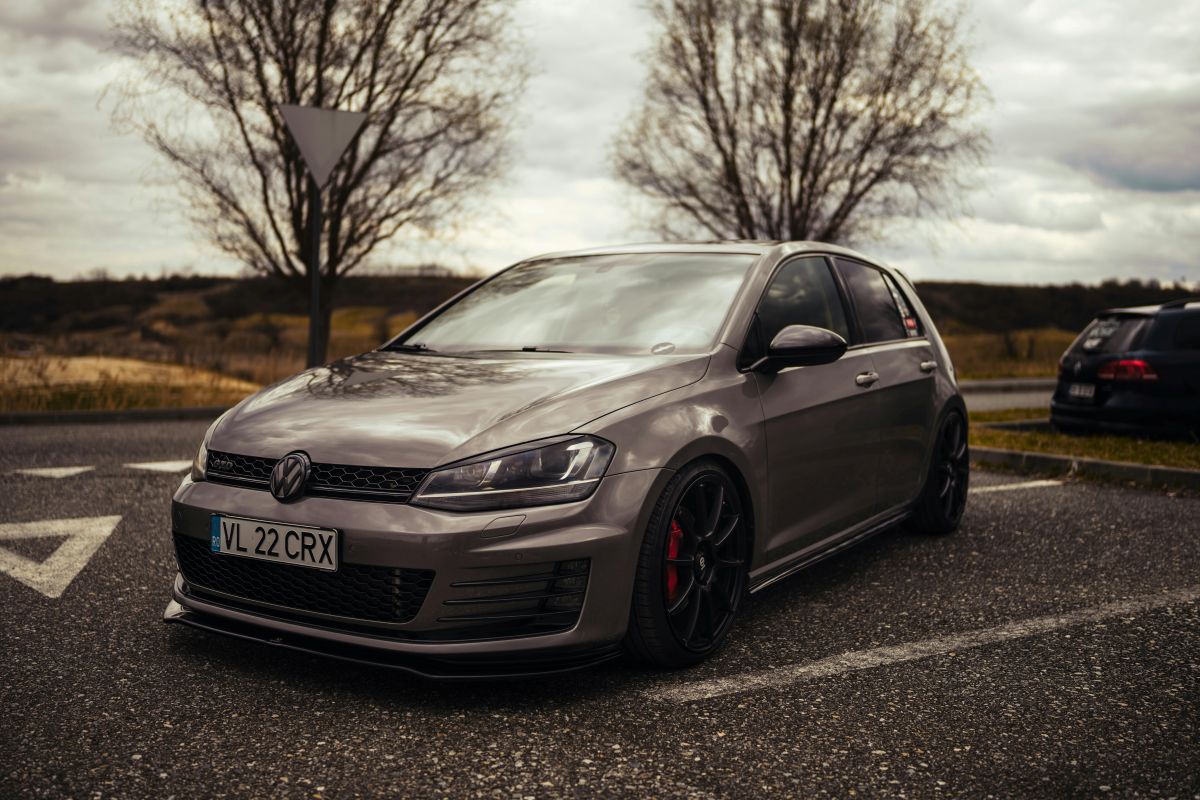
The seventh-generation GTD of 2013 – the most powerful GTD to date – put its growing number of ‘sports’ diesel rivals on notice. Now armed with 184bhp, torque of 280lb ft helped drop the 0-62mph dash to 7.1 seconds and raise the top speed to 142mph. For the new age of economy, the GTD was fast yet frugal, good for a quoted 62.8mpg. Thirty-one years later, Volkswagen employed the same set of values which begat the first GTD: performance and economy in one neatly-styled, practical package. It was later revised to look even sharper, and the addition of an estate version in 2015 added yet more sensibility.
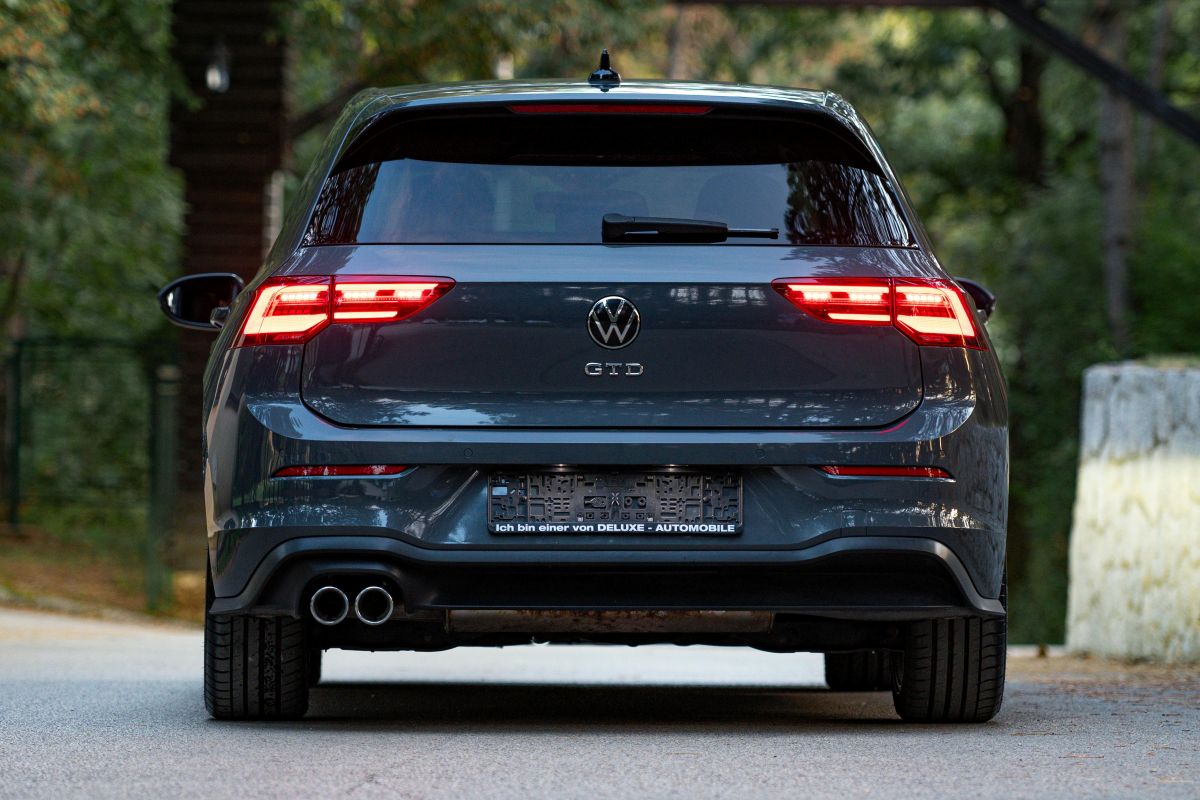
Arriving in 2020, the eighth-generation GTD represented the absolute zenith of the fast-and-frugal formula. It was armed with the most powerful production diesel engine ever dropped into a Golf: a 2.0-litre TDI pushing out 197bhp (200 PS) and a massive 295lb ft of torque. Sent to the front wheels exclusively through a smooth seven-speed DSG automatic gearbox, it could dispatch the 0-62mph sprint in 7.1 seconds and keep pulling all the way to 152mph.
Crucially, it wasn’t just faster; it was remarkably clever. To defend the ‘derv hot hatch’ against increasingly strict emissions laws, Volkswagen equipped the Mk8 engine with an innovative ‘twin-dosing’ AdBlue system featuring two separate SCR catalytic converters. This slashed nitrogen oxide (NOx) emissions drastically, making it one of the cleanest combustion engines on the market while still easily averaging an incredible 54.3mpg on longer runs. It was a 600-mile motorway weapon masquerading as a sharp, daily hatchback.
However, all good things must come to an end. With the arrival of the mid-lifecycle “Mk8.5” update, Volkswagen made the tough decision to drop the GTD from the line-up entirely, electing to focus its performance-economy development on the plug-in hybrid GTE and eHybrid models instead.
While the GTD badge has now officially ridden off into the sunset, its legacy remains intact. For over four decades, it proved that choosing fuel economy didn’t mean you had to leave your driving soul at the door. It was the sensible enthusiast’s worst-kept secret – and a tough act for the electric age to follow.
Almost as old as the GTI itself, the ‘sports’ diesel Golf still provides an equally intoxicating blend of performance, parsimony and hot hatch style. In fact, so popular is it on the used market, the GTD remains one of the most sought-after variants for UK buyers looking to beat high fuel costs. Happy 44th, GTD.
CLICK TO ENLARGE

"Re-invented for the digital age in 2008, few third-generation Volkswagen Scirocco drivers may realise the last time their beloved coupé appeared was in the more analogue 1990s. It was 1992 to be precise, which means 2017 marks a whole 25 years since the second "

"It’s 1976. Volkswagen launches a car with no precedent. The Golf GTI creates a new sector, the hot hatchback. Credited as partly responsible for the demise of the traditional two-seater sports car in the 1970s, it was immediately a hit, "

"images: Postfuel/Influx I’m seriously tempted to slip into motoring hack clichés about wolves and sheep when I get my first look at, and drive in, the new Golf R. We suppose the 'R' is meant to refer "
"In our high-tech, cordless, wireless world, where the notion of rewinding the latest VHS release and having to physically return it to Blockbuster - or for that matter, even plugging your vacuum cleaner into the wall - is considered more "

"Motorcycles & rock ‘n’ roll. Strawberries & cream. It’s a cliché of course. But at the heart of every cliché there sounds a note of truth. Alan Forbes knows all about this. “You can feel free when you play "

"Cars are all about people. It’s obvious really - but at times this simple truism can get lost. With the obsession with speed, power, style and design - with the object itself, you can forget that there is nothing "


