" Transporter T1 Nicknamed the 'Bull' , this first of a kind vehicle i.e. forward controlled, rear engined commercial van, went into production in 1950. It was the end of a story that started three years earlier when Dutch Importer Ben Pon "


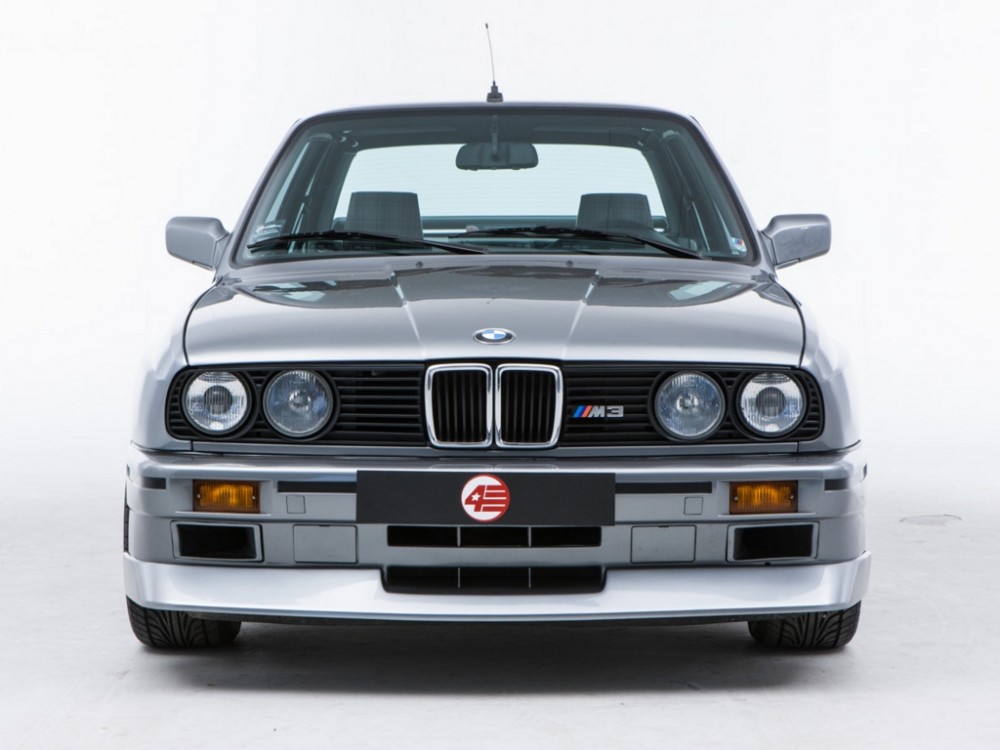
1986: E30
After completing its brief career in Formula 1, BMW’s Motorsport arm focused all its energy on touring car racing. The BMW M3 E30 was born. The first edition came with a 195hp, four-cylinder 16-valve power unit. Right from the start, the car was a success and in 1987 Italian driver Roberto Ravaglia won the World Touring Car Championship at the wheel of a BMW M3. In the following five years, the M3 was the uncontested leader in the international touring car scene, bringing home two European Touring Car Championships and winning the DTM twice. But the M3 was, of course, an equally successful road-going car. Sales reached a heady volume of 17,970 units, including 600 units of the 2.5-litre M3 Sport Evolution version, as well as 765 hand-built convertibles.


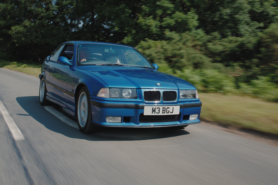
1992: E36
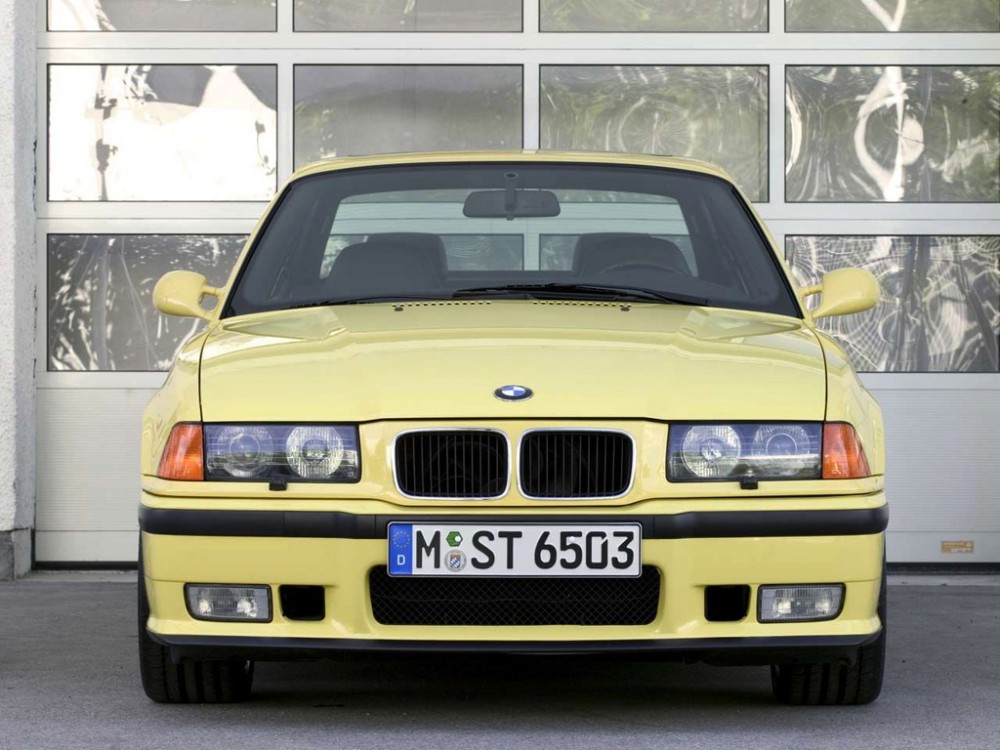
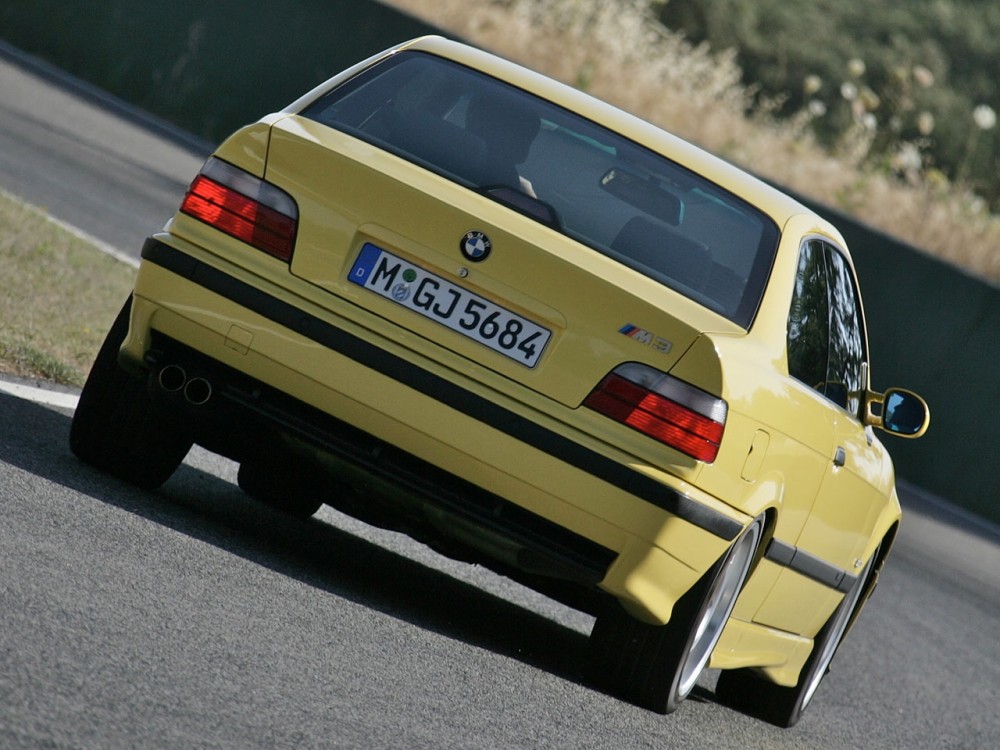
The E36 M3, launched in 1992, was voted car of the year in Germany two years on the trot – and in France even gained the questionable moniker ‘car of the century’. Between 1992 and 1996, M-sport built more than 85 four-door racing 3 Series based on the E36 M3 GT, with Johnny Cecotto at the wheel winning the ADAC GT Championship in 1993, and next setting out to conquer the US motorsport market. In 1995, the car received even more power – 321hp from 3.2 litres, to be precise – and for the first time, the M3’s grunt exceeded 100hp per litre. Double variable timing was also used for the first time, as well as a six-speed gearbox.

2000: E46
Making its debut in the year 2000, the E46 M3 turned up the gauge in all departments. 343hp. 365Nm. 5.2 seconds. And the design, in turn, reflected the increased attitude. One year later, the M3 GTR lined up on the starting grid of the American Le Mans Series with a four-litre eight-cylinder under the bonnet for the first time. The racing car with the characteristic air scoops in the bonnet and the powerful rear aerofoil proved superior on the race tracks of the USA and won the Championship in the GT Class. 2003 saw the return of the CSL with its roof, centre console and door panels made of carbon-fibre reinforced plastic. This lean beast was powered by an engine tuned to 360hp, which gave it an astonishing Nürburgring lap time of 7.50. In 2003. All 1,800 units were sold before they hit the forecourt.


2007: E90-series
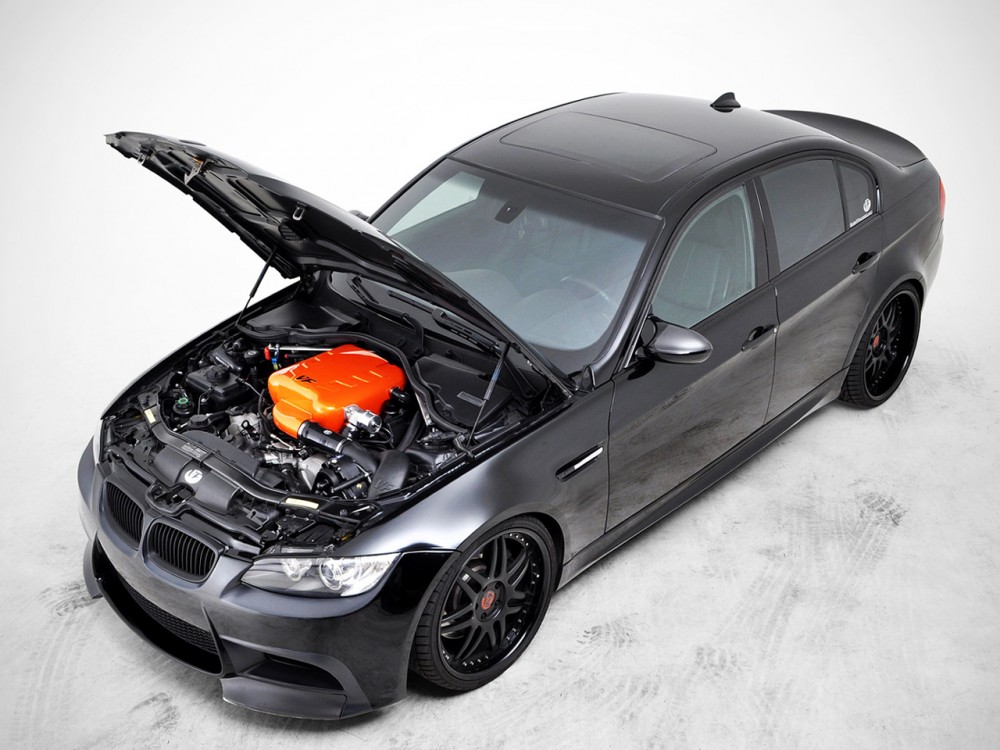
For the E90, with that marmite design that put quite a few folk off, BMW went with an eight-cylinder engine for the first time in the coupé and the saloon launched shortly afterwards. The new V8 engine generated power of 420hp from a displacement of 3,999 cubic centimetres. Around 85% of the maximum torque of 400Nm could be called up over the enormous rev range of 6,500rpm. Power was transferred to the rear wheels through a six-speed manual gearbox and a completely new rear-axle differential. Particularly in the coupé, the design engineers once again used lightweight construction. The positive experiences with other M models led to the roof also being made of carbon-fibre reinforced plastic, and the engine bonnet was made of aluminium.


2014: F80 Generation
By 2014, the M3 had changed once again – this time swapping out the V8 for a twin-turbocharged straight-six. It was a return to tradition in some ways, but also a clear sign of things to come. The new 3.0-litre engine pushed out 431hp and brought with it a wall of torque and real-world usability that made the F80 a more versatile M3 than ever. It was quicker, sharper and more efficient, with a raft of modern tech under the skin – including adaptive suspension and, for the first time, electric power steering. The dual-clutch gearbox made lightning-fast shifts, though a manual was still available for those who preferred things old-school. This was also the point where BMW split the M3 name – coupés became M4s, while the M3 badge stayed with the saloon. Some saw it as the beginning of a more corporate M car, but out on the road, the F80 still had that raw edge where it counted.
2020: G80 Generation
Then came the G80. If the M3 had ever tried to play it safe, this wasn’t it. The styling alone caused a stir, those giant kidney grilles becoming the talk of the car world almost overnight. But behind the drama was a seriously capable machine. The G80 launched with up to 510hp in Competition trim and, for the first time ever, offered all-wheel drive. It could grip, it could launch, and it could devour back roads or autobahns with equal ease. And after decades of rumours and teasers, BMW finally gave us the M3 Touring, an estate with all the pace of the saloon and space for the dog, too. With more screens, modes, and tech than ever before, the G80 felt like the most grown-up M3 yet. But it still knew how to let loose when you asked it to. For some, it’s the end of an era. For others, it’s the start of a new one.
CLICK TO ENLARGE
"Before the 1990s, you had iconic boxes and an endless sea of pop-up headlights on the road. Or, far too often, broken down in a layby. When the automotive world struck into the 1990s, however, that changed. The cars suddenly "

"Scotland’s unique landscapes provide some incredible backdrops for bike photography, with many of its most iconic locations accessible in a single day Whether you’re born and bred in Scotland or visiting it for the first time, it’s "

"Cars are all about people. It’s obvious really - but at times this simple truism can get lost. With the obsession with speed, power, style and design - with the object itself, you can forget that there is nothing "




Having previously owned an E46 M3 and currently driving an E90 M3 (not whilst I write this, mind), I can say I’ve very much enjoyed the latest part of M-Powered evolution.
When they were first released I wasn’t a fan of the E90’s shape and I still love and feel envious of the old E46’s “fatness”, but the V8 soon helps me forget.
The engine is a modern day, every man’s, superhero. It’s a complete throw-back that’s power blasted through a barricade of technology, computer chips and engineering. It’s a beast. What with the world guzzling and gargling on its last remnants of petrol, it’s a dinosaur.
The new M3/M4s will be great cars, there’s no doubt about that. This is an important stage in the legend’s evolution, though. This is the first time an M car will have to care more about the planet and MPG than raw power and speed, which in my mind, makes the E90 a closed chapter on the naturally aspirated M classics that went before.
Now it’s time to hand over to the turbos…