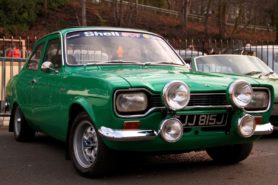
"The opening chapter of the Ford Escort story really starts with the closing eulogy of the Ford Anglia. The Anglia had ruled Britain’s roads for, well, an awful long time. And with its popularity, American looks and (on the "

If you’re a classic car enthusiast you’ve probably spent the last decade watching prices climb. But that could all be set to change now that we’re in 2026.
The market might have felt like an exclusive club for investors in recent years, leaving not much room for enthusiasts priced out of their passion. If you’re anything like us, though, you probably already spend a lot of time and money on your passion, so what’s a little bit more (especially if you’re not going to lose a great deal from doing so)?
That said, there are signs of change on the horizon. The latest analysis showed that older cars – especially those made in Britain – had dropped in value, while “youngtimers” (i.e. modern classics) have continued to increase.
In light of this news, we thought we’d take a look at the more popular of the Ford lot and what they’re currently going for:
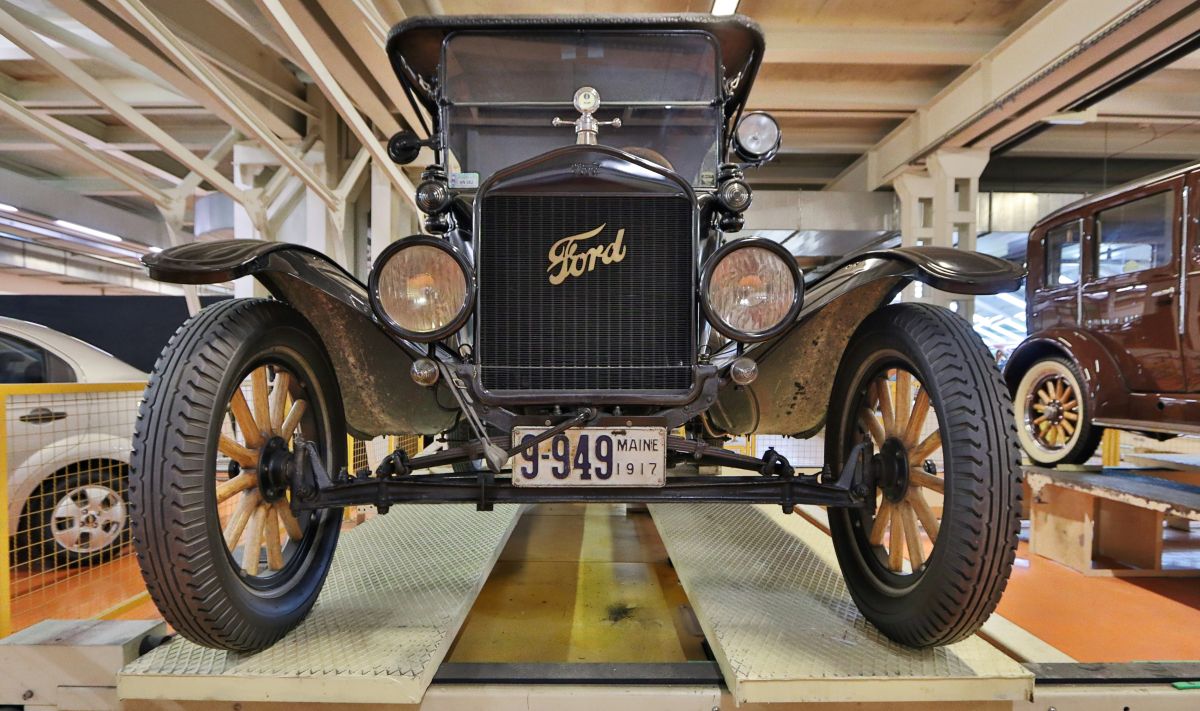
As one of the oldest Ford models still seen on the road today, the Ford Model T, at the time, was known as the world’s first affordable car. Henry Ford himself set about bringing the car to everyone and not just the wealthy. It was a consumerist miracle. It made motoring affordable for a burgeoning middle class – and was produced all over the world. Although Oldsmobile’s Ransom E Olds invented what we now know as the car assembly line, it was Henry Ford who perfected it. The Model T wasn’t a technical revolution, but its parts were interchangeable and produced quickly which brought the cost down.
Because it occupies such a unique place in classic Ford car history, the value of the Model T hasn’t changed too much over the years, though they have gone up a little. You should expect to pay between £10,500 and £27,500 for a Model T in good condition, or much less if you’re looking for a restoration project.
The 100E was Ford’s best-selling Anglia model. It arrived in the Fifties and was a family car to challenge previously launched Vauxhall and Hillman models. It didn’t take too long to catch up, though. The 100E Anglia was available in two and four-door guise for convenience. It did the job in an efficient and affordable manner – put down largely to the stalwart 1,172cc side valve engine.
The 100E was designed with Germany in mind, inspired by the likes of the Taunus P1 and Consul. A facelift in 1957 brought about a larger rear window, along with a number of other styling improvements. The Anglia comes with a large following of enthusiasts and there aren’t many road-worthy models left, so be prepared to pay between £5,000 and £15,000 for a half decent one – if you can find one, that is.
The Ford Escort achieved a lifespan of more than 30 years and is undeniably sewed into the fabric of motoring history. The model spanned seven generations in its 30-year production and is still the second-most popular vehicle (by sales) of all time in the UK. The Mk1 debuted at the Brussels Motor Show as a replacement to the Anglia.
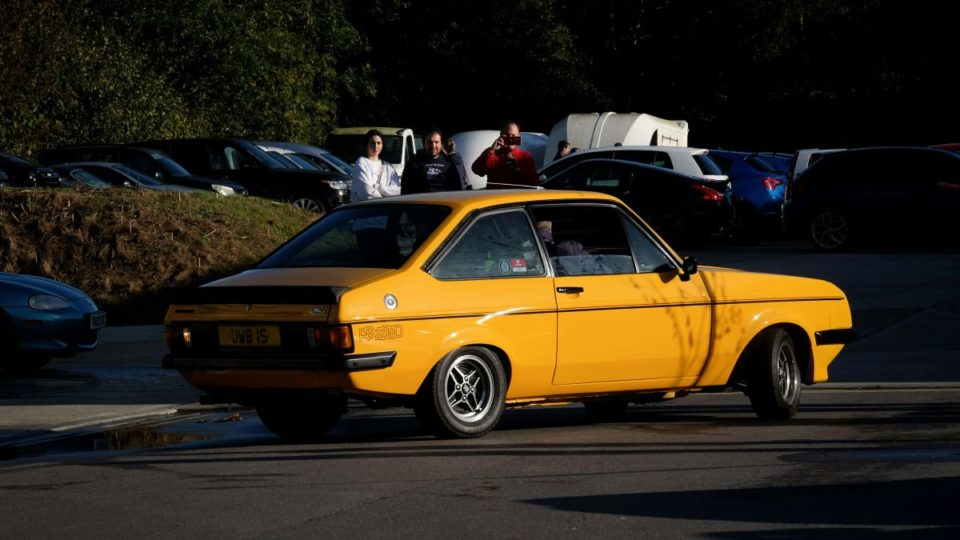
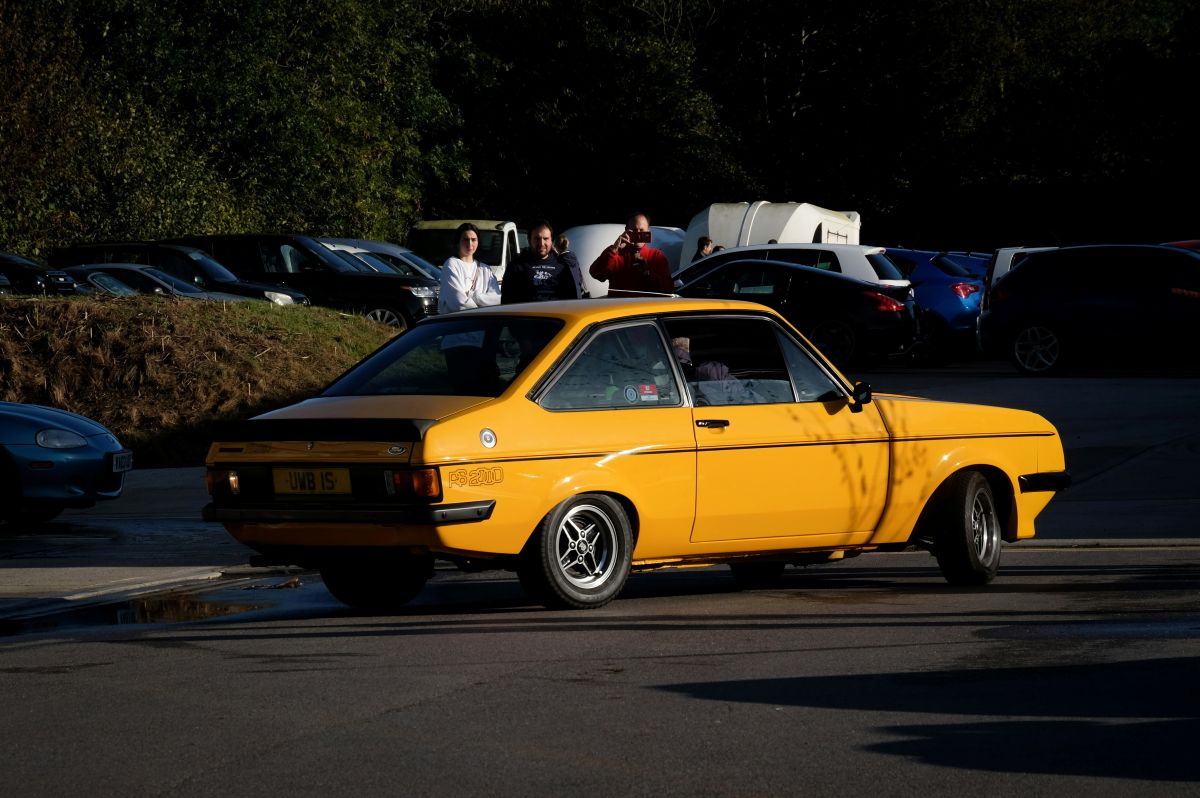
Its small-yet-big-enough-to-fit-a-family-along-with-luggage packaging at an affordable price meant it was an instant hit, with over two million being sold in the first six years of its run. The Mk2 came in 1975 and was developed together with Ford of Germany. The semi-British variant carried on its predecessor’s legacy by offering everything from the base-spec 1.1-litre unit to the rocket that is the RS2000.
In 1980 came the Mk3, which is regarded by Ford lovers as ‘not a proper Escort’ due to its more-angular design and transversely-mounted lump powering the front wheels, as opposed to the previous rear-wheel drive set up. In 1986 came the Mk4, which was basically a reskinned Mk3. 1990 saw the arrival of the Mk5 and was deemed a disappointment by Jeremy Clarkson and many other Escort fans. The Mk6, which arrived in 1992, was deemed slightly better than the Mk5. The final variant in the Mk7 ran from 1995-2000 and was basically a Mk5 with different engine and trim options.
Prices vary depending on the model you want to get your hands on; as a general rule, Fast Ford Escorts can set you back a lot more than more standard models. Whilst RS and Cosworth models can fetch around £40,000 to £65,000, mid-spec Mk1s and Mk2s can often be bought for between £10,000 and £20,000. Remember that 1986 Mk4s are officially turning 40 years old this year, making it tax and MOT exempt.
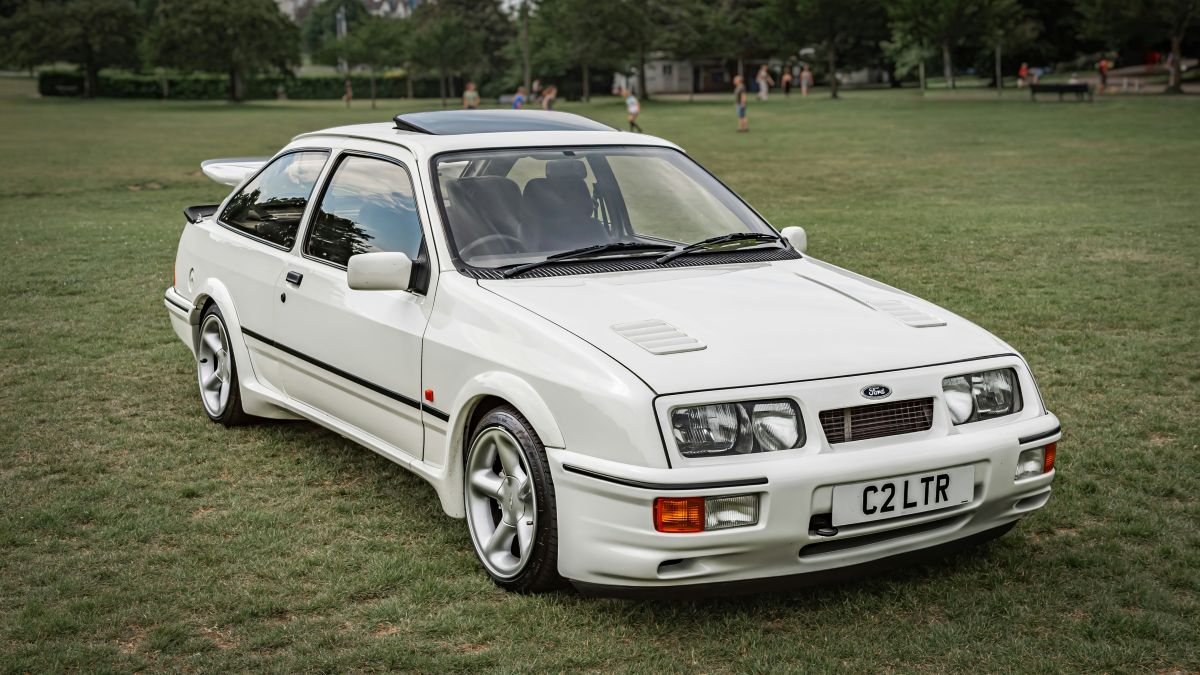
The Ford Sierra came available in saloon, hatchback and estate guises and achieved great things during its 11-year history. It demonstrated a good amount of traditional Ford virtues, which won over buyers initially horrified by Uwe Bahnsen’s ‘jelly mould’ styling.
The Ford community is huge and it’s well into rescuing rear-wheel drive variants of the Blue Oval so it’s no surprise prices are as they are; you’re looking at between £4,650 and £36,000 for standard models. But if you look at the likes of the Ford Sierra RS Cosworth model, you’ll need to look in the region of £100,000 to £160,000 and sometimes more for an RS500. Note that the 1986 RS Cosworth will be turning 40 this year, which will help you save on tax and MOT costs. You’ll be pleased to know that the four-door Sapphire Cosworth can still be found for between £33,000 and £55,000.
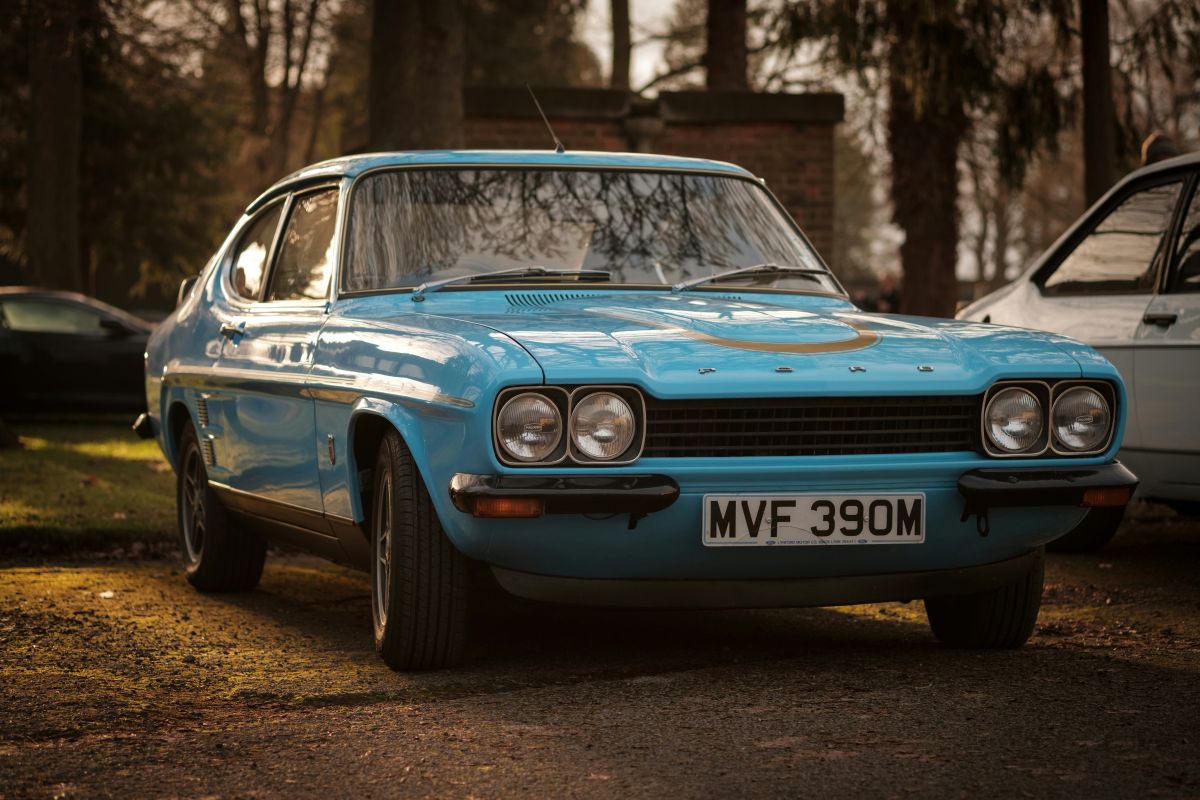
Ford’s Capri entered the new decade with a lot to offer – transatlantic styling, straightforward mechanicals and a car to fit more or less any budget. From the lowliest four-cylinder to the fastest V6, the Capri offered the same long bonnet and hatchback practicality, and was quickly developed through three iterations during its 18-year history.
The Mk2 came in 1974, following the wake of the oil crisis. With this new version, Ford appeared to lessen the Capri’s glamour and make it a more versatile model with its hatchback rear end and split folding rear seats. The Mk3, on the other hand, arrived in 1978 and ran until 1987. While 70s Mk2 Capris were once seen as the ugly ducklings of the variants, they are now a lot more popular. This is because they had a relatively short production run, and many didn’t survive, making it harder to find decent examples of the model. Bargains can still be had, with estimates between £6,500 and 20,000. Expect to pay over £10k more for the Mk1 and Mk3 models.
CLICK TO ENLARGE

"I guess my interest in Ford Capri started in 1972 when I was 9 years old. I was given a copy of The Observer Book of Automobiles as a present by my parents. I found it fascinating. I loved all different sorts "

"Fast Ford hysteria has hit cataclysmic heights in recent years. The latest Focus RS was launched, instantly becoming the world’s favourite hot hatch and trumping all of its – much pricier – German rivals for both pace and driving pleasure. The "

"Photography: Influx/Magneto “I couldn’t afford a Mustang”, says 26-year-old Capri owner Pete Wallwork from Truro, Cornwall. I had asked the bike mechanic, BMX rider, barber and photographer the obvious question. Why would a young gun be attracted to "

"1986: E30 After completing its brief career in Formula 1, BMW’s Motorsport arm focused all its energy on touring car racing. The BMW M3 E30 was born. The first edition came with a 195hp, four-cylinder 16-valve power unit. Right from the "

" Legislation is going to change everything about the nature and aesthetic of urban transport. Stirling Eco have one solution. On October 25, 2021 the London Ultra Low Emission Zone (ULEZ) expanded out to the North and South Circular Roads. This — and other "

"The motorsport community has always been a core foundation for enthusiasts, participants and spectators alike. It’s a shared passion that brings people together, ignites fierce competition and sparks lifelong friendships. But for some people it runs even deeper than "